Rhône-Alpes
Former French region with Lyon as capital and Alpine borders.
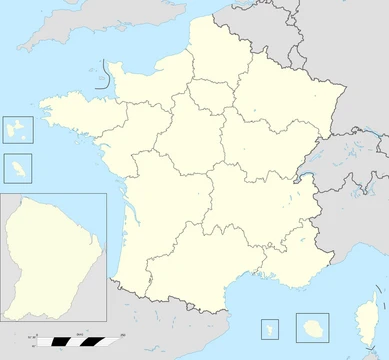
Rhône-Alpes was an administrative region of France located on the eastern border of the country, towards the south. Named after the river Rhône and the Alps mountain range, its capital Lyon is the second-largest metropolitan area in France after Paris. Since 1 January 2016, it has been part of the new Auvergne-Rhône-Alpes region. The region had the sixth-largest economy of any European region and was a major transit hub linking northern France and Europe to the Mediterranean.
- Capital
- Lyon
- Departments
- Ain, Ardèche, Drôme, Isère, Loire, Rhône, Savoie, Haute-Savoie
- Highest peak
- Mont Blanc
- Major lakes
- Lac de Paladru, Lac d'Aiguebelette, Lac du Bourget, Lac d'Annecy, Lac de Nantua, Lac Léman
- Official language
- French
- GDP per capita
- €31,231
- Winter Olympics hosted
- 1924 (Chamonix), 1968 (Grenoble), 1992 (Albertville)
Lore & Background
The earliest recorded settlers of Rhône-Alpes were the Gauls, who founded cities such as Lyon. Most of the area became part of Roman territory during Julius Caesar's invasion of Celtic Gaul, and Lyon became a major city in the Roman Empire. Excepting Savoy, the region was part of the Merovingian and Carolingian Kingdoms before becoming a royal territory under the Capetians, with its cultural and political developments paralleling those of greater France.
Rhône-Alpes was a prosperous region with a diverse economy, including light engineering, high technology, tourism, and education. It was one of the Four Motors for Europe. The region hosted the Winter Olympics three times: in 1924 at Chamonix, 1968 at Grenoble, and 1992 at Albertville. Lyon is noted as a gastronomic centre of France, with traditional bouchons serving local dishes and wines such as Beaujolais and Côtes du Rhône.
Reader's Guide
Rhône-Alpes was significant as a major European transit hub and economic powerhouse, with the sixth-largest economy of any European region. Its location on the eastern border of France, bordering Switzerland and Italy, made it a crossroads of Europe. The region's economy was second in size only to Île-de-France in France, driven by high-tech industries in Grenoble, mechanical engineering in Annecy, and tourism in the Alps and Ardèche. Lyon, as a UNESCO World Heritage site, contributed a Gross Metropolitan Product of about €85 billion. The region's legacy includes hosting three Winter Olympics and being part of the Alps–Mediterranean Euroregion since 2007. Its diverse landscapes, from Mont Blanc to the Gorges de l'Ardèche, and its gastronomic traditions, including Bresse poultry and numerous cheeses, continue to define the area's cultural and economic identity.
Did You Know?
- Rhône-Alpes had the sixth-largest economy of any European region.
- The region hosted the Winter Olympics three times: 1924, 1968, and 1992.
- Lyon is classified by UNESCO as a World Heritage site.
- The Ardèche river has carved the deepest gorge in Europe.
More in French Regions 1-21
Spotted an error? Know more?
This is a living reference — every entry is fact-audited, and reader corrections feed straight into our audit queue. Suggest an edit · See this site's audit record