Corsica
Mediterranean island, French region with growing nationalist movement.
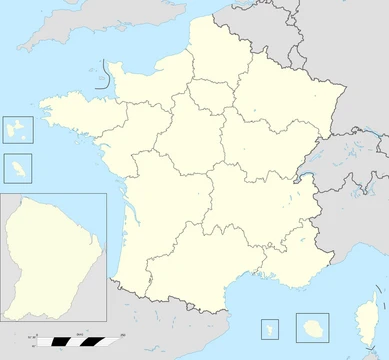
Corsica is a Mediterranean island and one of France’s 18 regions. It ranks as the fourth-largest island in the Mediterranean, located southeast of mainland France, west of the Italian Peninsula, and directly north of the Italian island of Sardinia—its closest landmass. A single mountain chain covers two-thirds of the island. Its population stood at 365,636 in January 2026. As a territorial collectivity of France, Corsica is slated to gain “a form of autonomy” within the country in the future. The regional capital is Ajaccio. Corsica enjoys more extensive autonomy than other French regional collectivities, and its Corsican Assembly can exercise limited executive powers. The island is split into two administrative departments, Haute-Corse and Corse-du-Sud, but these were merged with their respective regional and departmental territorial collectivities on 1 January 2018 to form a single territorial collectivity. The second-largest town is Bastia, the prefecture of Haute-Corse.
From 1284 to 1755, Corsica was ruled by the Republic of Genoa, then seceded to become a self-proclaimed, Italian-speaking republic. In 1768, Genoa ceded the island to Louis XV of France as part of a pledge for debts incurred after enlisting French military help to suppress a Corsican revolt; France annexed it in 1769. That same year, Napoleon Bonaparte—the future Emperor of the French—was born in Ajaccio. His ancestral home, Maison Bonaparte, is now a museum and visitor attraction. Due to historical ties with Tuscany, Corsica retains many Italian cultural elements, and many Corsican surnames originate from the Italian peninsula. French is the official and most widely spoken language; Corsican, a native Italo-Dalmatian language, is recognized as one of France’s regional languages. Corsica is the third-least populated French region, after Mayotte and French Guiana.
Recent Corsican history has been largely shaped by a growing nationalist movement. A regionalist movement emerged in the 1960s (Corsica was part of the Provence-Alpes-Côte d’Azur region until 1975). After an armed standoff between French authorities and Corsican autonomists in 1975, and a harsh response from French authorities, an ongoing armed conflict began between French forces and Corsican nationalist guerrilla and paramilitary groups, most notably the National Liberation Front of Corsica (FLNC) and its many offshoots. War-
- Population (Jan 2026)
- 365,636
- Regional capital
- Ajaccio
- Second largest town
- Bastia
- Official language
- French
- Recognized regional language
- Corsican
- Administrative status
- Territorial collectivity of France
- Largest island rank
- Fourth-largest in the Mediterranean
Lore & Background
Corsica has been occupied since the Mesolithic era, with permanent human presence documented from the 6th millennium BC. After brief occupations by Carthaginians, ancient Greeks, and Etruscans, it was incorporated by the Roman Republic at the end of the First Punic War in 238 BC. The Romans established colonies at Mariana and Aléria, but had little control over the interior. The island produced sheep, honey, resin, wax, and exported many slaves, and was known for cheap wines and as a place of exile, notably for the philosopher Seneca. Corsica was integrated into Roman Italy by Emperor Diocletian.
In the Middle Ages, the island was invaded by Vandals, Ostrogoths, and later became part of the Kingdom of the Lombards. Pepin the Short expelled the Lombards and nominally granted Corsica to Pope Stephen II. After Pisa and Genoa freed the island from Arab invasion, it came under Pisan influence, experiencing massive immigration from Tuscany. Following the Battle of Meloria in 1284, Genoese rule began, contested by the King of Aragon. In 1450, Genoa ceded administration to the Bank of Saint George. In the 16th century, a Franco-Ottoman fleet occupied Corsica in 1553, but Genoese supremacy was reestablished by the Peace of Cateau-Cambrésis. The Genoese introduced the chestnut tree and built coastal towers against Barbary pirates. A general insurrection against Genoa began in 1729.
In 1755, an independent Corsican Republic was proclaimed under Pasquale Paoli, remaining sovereign until 1769 when France conquered the island. Following the French Revolution, Paoli returned from exile and in 1794 invited British forces to free Corsica, establishing an Anglo-Corsican Kingdom. The British withdrew in 1796. The future Emperor Napoleon Bonaparte was born in Ajaccio in 1769. In the 20th century, an armed conflict began in 1975 between French forces and Corsican nationalist groups, most notably the National Liberation Front of Corsica (FLNC). A truce was announced in 2014 with the FLNC-Union of Combatants, and in 2016 with the FLNC-22 October. Violence resumed in 2022 after the murder of jailed nationalist Yvan Colonna, and in 2023 the FLNC-UC and FLNC-22U resumed armed conflict.
Reader's Guide
Corsica's significance lies in its unique position as a Mediterranean island with a distinct cultural and political identity within France. Historically, it was a crossroads of ancient civilizations—Carthaginian, Greek, Etruscan, Roman—and later a contested territory between Italian maritime republics, notably Pisa and Genoa, before being annexed by France in 1769. The island is the birthplace of Napoleon Bonaparte, whose ancestral home in Ajaccio is a museum. Corsica's legacy includes a long tradition of resistance and nationalism, from the Corsican Republic of 1755 to the modern armed conflict that began in 1975. The island's language, Corsican, is an Italo-Dalmatian language recognized as a regional language of France, and many surnames reflect Italian roots. Administratively, Corsica became a single territorial collectivity in 2018, merging its two departments, and enjoys more extensive autonomy than other French regions, with the Corsican Assembly exercising limited executive powers. The nationalist movement has shaped recent history, with truces in 2014 and 2016 followed by renewed violence in 2022–2023. Corsica remains the third-least populated region of France, after Mayotte and French Guiana.
Did You Know?
- Corsica is the fourth-largest island in the Mediterranean Sea.
- The island was ruled by the Republic of Genoa from 1284 to 1755.
- Napoleon Bonaparte was born in Ajaccio, Corsica, in 1769.
- Corsica's regional and departmental territorial collectivities were merged on 1 January 2018.
Frequently Asked Questions
Who is Corsica?
Corsica is a Mediterranean island and one of France's 18 regions, home to roughly 365,636 residents as of January 2026. It ranks as the fourth-largest island in the Mediterranean Sea, with Ajaccio serving as its regional capital and Bastia as the second-largest town.
What is Corsica's administrative status?
Corsica functions as a territorial collectivity of France, which grants it more extensive self-governance than most other French regions. The region is further slated to receive an additional form of autonomy within the French state in the future.
Where is Corsica located?
The island sits southeast of mainland France, positioned west of the Italian Peninsula and directly north of Sardinia, which is its nearest neighboring landmass.
What defines Corsica's terrain?
A single mountain range stretches across roughly two-thirds of the island, giving it a notably rugged and elevated character that sets it apart from most other French regions.
What languages are spoken in Corsica?
French is the official language, while Corsican is recognized as a regional language. This bilingual identity is a central part of the region's cultural character and is closely tied to its ongoing nationalist movement.
More in French Regions 1-21
Spotted an error? Know more?
This is a living reference — every entry is fact-audited, and reader corrections feed straight into our audit queue. Suggest an edit · See this site's audit record