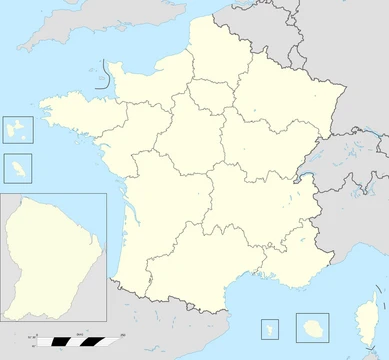
Île-de-France
Most populous French region, containing Paris and a third of national GDP.
The Île-de-France is the most populous of the eighteen regions of France, containing the capital city of Paris. Located in the north-central part of the country, it is often called the Paris Region and retains a prime economic position on the national stage, with a 2017 population nearly one-fifth of the national total. The region was created as the 'District of the Paris Region' in 1961 and renamed after the historic province of Île-de-France in 1976.
- Population (2023)
- 12,271,794
- Area
- 12,012 square kilometres (4,638 square miles)
- GDP (2019)
- €742 billion, nearly one-third of France's total
- Poverty rate (2015)
- 15.9%
- Number of departments
- 8
- Capital
- Paris
Lore & Background
The Île-de-France was inhabited by the Parisii, a Celtic sub-tribe, from around the middle of the 3rd century BC. The Romans conquered the area in 52 BC and established a prosperous city on Paris's Left Bank. Christianity was introduced in the mid-3rd century AD by Saint Denis, the first Bishop of Paris, who according to legend was beheaded on Montmartre and later buried at the site of the Basilica of Saint-Denis. Clovis the Frank made Paris his capital in 508, and under the Capetian kings, Paris gradually became the largest and most prosperous city in France.
Reader's Guide
The Île-de-France region holds immense significance as the economic and political heart of France. Its GDP in 2019 was nearly one-third of the national total and 5% of the European Union's, with the highest per capita GDP of any French region. The economy has shifted toward high-value-added services and high-tech manufacturing, hosting headquarters of major banks, telecoms, and energy companies. Despite its wealth, the region faces significant income inequality, with a 2015 poverty rate of 15.9% and rising housing prices pushing less affluent residents outside Paris. The region includes historic sites such as the palaces of Versailles and Fontainebleau and the most-visited tourist attraction in France, Disneyland Paris. Its administrative structure, created in 1961 and renamed in 1976, comprises eight departments, with Paris at its center.
Did You Know?
- The name Île-de-France literally means 'Island of France,' but the region is not an island; the etymology is unclear.
- The region's residents are sometimes called Franciliens, an administrative word created in the 1980s.
- The region covers about 2% of metropolitan French territory but held nearly one-fifth of the national population in 2017.
- The former department of Seine, abolished in 1968, included the city of Paris and parts of the petite couronne.
Frequently Asked Questions
Who is Île-de-France?
Île-de-France is France's most populous region, sitting in the north-central part of the country and housing the capital city of Paris. It is so closely tied to the capital that people often simply call it the Paris Region.
What is Île-de-France's role in the national story?
The region anchors France's economy, producing roughly one-third of the country's total GDP. It also functions as the political and administrative heart of the nation through Paris.
How did Île-de-France come into existence?
The region was first established in 1961 under the bureaucratic title 'District of the Paris Region' and was later renamed in 1976 to honour the old historic province that once carried the same name.
What does Île-de-France's territory look like?
The region covers about 12,012 square kilometres and is split into eight departments. As of 2023 its population stands at roughly 12.27 million residents.
Why is Île-de-France considered the 'main character' of French regional lore?
With a 2019 GDP near €742 billion and a population close to one-fifth of the national total, it wields far more economic and demographic weight than any other region. Yet its 2015 poverty rate of 15.9% shows the story still carries its share of hardship.
More in French Regions 1-21
Spotted an error? Know more?
This is a living reference — every entry is fact-audited, and reader corrections feed straight into our audit queue. Suggest an edit · See this site's audit record