Centre-Val de Loire
An inland French region straddling the middle Loire Valley.
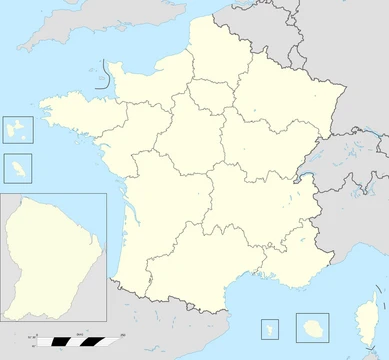
Centre-Val de Loire is one of France’s eighteen administrative regions and, like four others, has no coastline. It lies across the middle of the Loire Valley in the country’s interior and includes six departments: Cher, Eure-et-Loir, Indre, Indre-et-Loire, Loir-et-Cher, and Loiret. In 2018, its population was 2,572,853. The regional prefecture is Orléans, while Tours is the largest city.
The region was formed from parts of the historic provinces of Touraine, Orléanais, and Berry. It was originally named Centre, chosen by the government purely for its geographic position in northwest-central France, but this name was widely criticized as bland and uninspired. Alternatives such as Val de Loire or Cœur de Loire were proposed. On 17 January 2015, as part of a national reorganization of regions, the official name became Centre-Val de Loire, and a new logo was introduced.
Centre-Val de Loire shares borders with six other regions—more than any other French region. Its neighbors are Normandy to the northwest, Île-de-France to the northeast, Bourgogne-Franche-Comté to the east, Auvergne-Rhône-Alpes to the southeast, Nouvelle-Aquitaine to the southwest, and Pays de la Loire to the west.
The region’s largest cities, based on 2018 populations, are Tours (136,463), Orléans (116,238), Bourges (64,668), Blois (45,871), Châteauroux (43,442), Chartres (38,426), Joué-lès-Tours (38,250, part of Tours Métropole Val de Loire), Dreux (30,664), Vierzon (25,725), and Olivet (22,168, part of Orléans Métropole).
In 2018, the region’s gross domestic product was €72.4 billion, representing 3.1% of France’s total economic output. Adjusted for purchasing power, GDP per capita was €25,200, or 84% of the EU27 average, while GDP per employee was 99% of the EU average. In 1994, the Regional Council of Centre created an economic development agency called Centréco to attract investment and new businesses from both French and foreign companies. The agency also supports regional companies internationally and promotes local agrofood products under the “du Centre” label.
The only airport in the region with limited scheduled flights is Tours Val de Loire Airport. For more domestic and international destinations, the region typically relies on Paris’s Charles de Gaulle Airport, which is about an hour and forty minutes away by train from Tours.
- Population (2018)
- 2,572,853
- Prefecture
- Orléans
- Largest city
- Tours
- Number of departments
- 6
- GDP (2018)
- 72.4 billion euros
- GDP per capita (2018)
- 25,200 euros (84% of EU27 average)
- Official name change
- 17 January 2015
Lore & Background
The region was originally named Centre by the French government purely on the basis of geography, referring to its location in northwest-central France. This name was criticized as being too dull and undistinguished, leading to proposals such as Val de Loire or Cœur de Loire. On 17 January 2015, as part of the reorganization of French regions, the official name was changed to Centre-Val de Loire, and a new logo was created.
Reader's Guide
Centre-Val de Loire is notable as one of five French regions without a coastline, yet it borders six other regions—the highest number of shared borders among any French region. Its economy, with a GDP of 72.4 billion euros in 2018, accounted for 3.1% of French economic output. The region's economic development agency, Centréco, was created in 1994 to promote investment and business establishment. The region's only airport, Tours Val de Loire Airport, offers limited flights, so travelers typically use Paris's Charles de Gaulle Airport, accessible by train from Tours in one hour and 40 minutes. The region was formed from parts of the historical provinces of Touraine, Orléanais, and Berry.
Did You Know?
- Centre-Val de Loire borders six other French regions, the highest number of shared borders among all French regions.
- The region's name was changed from Centre to Centre-Val de Loire on 17 January 2015.
- Its GDP per capita in 2018 was 25,200 euros, or 84% of the EU27 average.
- Tours Val de Loire Airport is the only airport in the region, offering limited flights.
Frequently Asked Questions
Who is Centre-Val de Loire?
Centre-Val de Loire is one of France's eighteen administrative regions, tucked entirely in the country's interior with zero coastline. It stretches across the middle stretch of the Loire Valley and is composed of six departments: Cher, Eure-et-Loir, Indre, Indre-et-Loire, Loir-et-Cher, and Loiret.
What are Centre-Val de Loire's powers or role?
Its defining trait is commanding the heart of the Loire Valley, which gives it a dense cluster of châteaux, vineyards, and river scenery that anchor French cultural identity. Orléans holds the administrative baton as prefecture, while Tours is the region's most populous city and its de facto cultural hub.
How did Centre-Val de Loire get its name?
It launched simply as 'Centre,' a label the government assigned purely because the territory sits in the geographic middle of France. The 'Val de Loire' suffix was later appended to spotlight the river valley running through its core and to set it apart from other central regions.
Why is Centre-Val de Loire important?
With roughly 2.57 million residents in 2018 and a GDP of 72.4 billion euros, it is a major economic engine for France's inland belt. Its per-capita GDP of 25,200 euros lands at about 84% of the EU-27 average, marking it as a solid mid-tier performer.
What is Centre-Val de Loire's origin story?
The region was stitched together from pieces of three older provinces—Touraine, Orléanais, and Berry—giving it a patchwork heritage that still shows up in local dialects and traditions. It shares the 'no sea access' quirk with four other French regions, cementing its identity as a true heartland territory.
More in French Regions 1-21
Spotted an error? Know more?
This is a living reference — every entry is fact-audited, and reader corrections feed straight into our audit queue. Suggest an edit · See this site's audit record