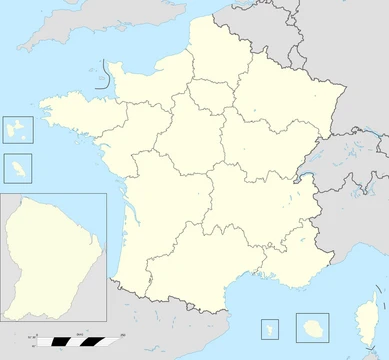
Burgundy
Historical region in France, known for its wine and medieval power.
Burgundy (pronounced BUR-gən-dee; Bourgogne in French, Bregogne in Burgundian) is a historical region of France, with Dijon as its capital. Its territory largely matches that of the former administrative region of the same name, which was in place from 1982 until it was combined into Bourgogne-Franche-Comté on 1 January 2016. The region takes its name from the Burgundians, an East Germanic people. Over time, Burgundy has been linked to various political entities, most famously the Duchy of Burgundy. This duchy arose in the early Middle Ages and grew into one of the most significant principalities within the Kingdom of France. During the 1300s and 1400s, it served as the heart of the Valois-Burgundian State, a dominant force in late medieval Western Europe.
Burgundy is famous for its historic buildings, monastic sites, and wine—especially Burgundy wine. Major religious centers included Cluny, Cîteaux, and Vézelay, while Dijon became a key hub for politics, culture, art, and learning.
The name Burgundy first appeared in the 9th century as one of the successor states to the ancient Kingdom of the Burgundians. That kingdom, after being conquered in 532, had become part of the Frankish Empire. Since France introduced its departmental system in 1790, Burgundy has referred to the area covering the four departments of Côte-d'Or, Saône-et-Loire, Yonne, and Nièvre.
The earliest known inhabitants of what would become Burgundy were Gallic Celtic tribes, most notably the semi-republican Aedui. They were eventually absorbed into the Roman Empire after the Gauls' defeat at the Battle of Alesia, and Gallo-Roman culture thrived under Roman rule. In the 4th century, the Burgundians—a Germanic people possibly originating from the Baltic island of Bornholm—settled in the western Alps and founded the Kingdom of the Burgundians. This kingdom was conquered in the 6th century by another Germanic group, the Franks. Under Frankish control, the Kingdom of Burgundy continued for several centuries.
The modern region of Burgundy covers only the northwestern part of the much larger ancient Kingdom of the Burgundians. In 843, the Treaty of Verdun split the old Burgundian lands, assigning the northwestern areas to the West Frankish Kingdom. From the early 10th century, these areas were organized as the Duchy of Burgundy, under the sovereignty of the Kingdom of France. From 1004, the Hou
- Capital
- Dijon
- Historical Region
- France
- Named After
- Burgundians (East Germanic people)
- Major Political Entity
- Duchy of Burgundy
- Known For
- Wine, historical monuments, monastic heritage
- Modern Status
- Merged into Bourgogne-Franche-Comté in 2016
Lore & Background
The first recorded inhabitants of the area that was to become Burgundy were various tribes of Gallic Celts, the most prominent of which were the semi-republican Aedui, who were eventually incorporated into the Roman Empire following the Gaulish defeat in the Battle of Alesia. During the 4th century, the Burgundians, a Germanic people who may have originated on the Baltic island of Bornholm, settled in the western Alps and founded the Kingdom of the Burgundians, which was conquered in the 6th century by the Franks. Under Frankish dominion, the Kingdom of Burgundy continued for several centuries. In 843, under the Treaty of Verdun, the old Burgundian lands were divided, with the north-western regions being assigned to the West Frankish Kingdom. Since the beginning of the 10th century, those regions were organized as the Duchy of Burgundy, remaining under the sovereignty of the Kingdom of France.
Reader's Guide
Burgundy's significance lies in its role as a major political and cultural power in late medieval western Europe. The Duchy of Burgundy, under the Valois-Burgundian State, became one of the largest composite polities of the era, with the Dukes of Burgundy among the wealthiest and most powerful princes in Europe, sometimes called 'Grand Dukes of the West'. The court in Dijon outshone the French court both economically and culturally. Burgundy was also home to some of the most important Western churches and monasteries, including Cluny, Cîteaux, and Vézelay, which exerted strong influence in Europe for centuries. The region is one of France's main wine-producing areas, known for both red and white wines made from Pinot noir and Chardonnay grapes. The extinction of the Valois-Burgundy dynasty in the late 15th century led to the absorption of the Duchy into the French crown lands, while the Burgundian possessions in the Low Countries passed to the Habsburgs, marking the beginning of the centuries-long French–Habsburg rivalry. Today, Burgundy's modern existence is rooted in the dissolution of the Frankish Empire, and the region comprises the four departments of Côte-d'Or, Saône-et-Loire, Yonne, and Nièvre.
Did You Know?
- Burgundy is named after the Burgundians, an East Germanic people who may have originated on the Baltic island of Bornholm.
- The Abbey of Fontenay is a UNESCO World Heritage Site and the best-preserved Cistercian abbey in Burgundy.
- The Duchy of Burgundy formed the core of the Valois-Burgundian State, a major power in late medieval western Europe.
- Burgundy's capital is Dijon, which developed into an important centre of politics, culture, art, and learning.
Frequently Asked Questions
Who is Burgundy?
Burgundy (Bourgogne) is a historical region in eastern France, with Dijon serving as its capital. It takes its name from the Burgundians, an East Germanic people who settled in the area centuries ago.
What is Burgundy best known for?
The region is widely celebrated for its world-renowned wine production, alongside a rich collection of medieval monuments and a deep monastic heritage. Historically, it was the heart of the powerful Duchy of Burgundy, one of the most influential principalities of the early Middle Ages.
How does Burgundy's story end?
As a standalone administrative entity, Burgundy's era concluded on 1 January 2016, when it was merged with Franche-Comté to form the combined region of Bourgogne-Franche-Comté. The historical and cultural identity of Burgundy, however, remains very much alive to this day.
Why is Burgundy important in French history?
The Duchy of Burgundy, which originated in the early Middle Ages, grew into one of the most politically significant principalities in European history. The region's strategic position and considerable wealth made it a key player in medieval French and broader continental politics.
What is Burgundy's capital and what role does it play?
Dijon serves as the capital of the Burgundy region and has long functioned as its administrative and cultural center. The city is deeply tied to the region's medieval heritage and its well-known culinary traditions.
More in French Regions 1-21
Spotted an error? Know more?
This is a living reference — every entry is fact-audited, and reader corrections feed straight into our audit queue. Suggest an edit · See this site's audit record