Aquitaine
Historical region of southwestern France, former kingdom and duchy.
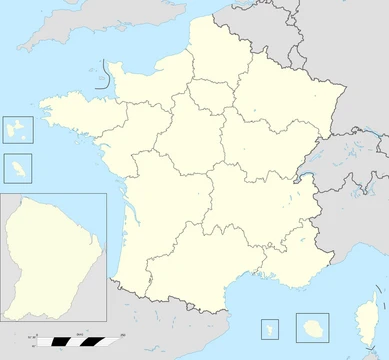
Aquitaine is a historical region of southwestern France, situated along the Atlantic Ocean and the Pyrenees mountain range on the border with Spain. It was a kingdom and a duchy in the Middle Ages, and its boundaries fluctuated considerably. Since 1 January 2016 it has been part of the administrative region of Nouvelle-Aquitaine.
- location
- Southwestern corner of metropolitan France
- departments
- Dordogne, Lot-et-Garonne, Pyrénées-Atlantiques, Landes, Gironde
- major_city
- Bordeaux
- historical_periods
- Roman province, medieval kingdom and duchy, English possession (1154–1453)
- language_heritage
- Early form of Basque (Proto-Basque) likely prevalent in ancient times
Lore & Background
The Romans established Gallia Aquitania as a province. Under Augustus, from 27 BCE the province was stretched north to the river Loire. In 392, the Roman imperial provinces were restructured as Aquitania Prima, Aquitania Secunda, and Aquitania Tertia (Novempopulania). During the Early Middle Ages, the Visigoths established themselves in southwest Gaul, but were expelled in 507 after the Battle of Vouillé. A united Basque-Aquitanian realm reached its heyday under Odo the Great, who fended off Umayyad troops at Toulouse in 721. In 781, Charlemagne proclaimed his son Louis King of Aquitaine within the Carolingian Empire. After the 843 Treaty of Verdun, the Kingdom of Aquitaine ceased to have any relevance. In 1058, the Duchy of Vasconia and Aquitaine merged under William VIII. The title 'Duke of Aquitaine' was held by the counts of Poitiers from the 10th to the 12th century.
Reader's Guide
Aquitaine's significance lies in its role as a contested territory between Frankish, Basque, and English powers during the Middle Ages. It was a cornerstone of the Angevin Empire after Eleanor of Aquitaine married Henry II of England in 1154, remaining English until the end of the Hundred Years' War in 1453. The region's ancient language, Proto-Basque, is notable as the last surviving non-Indo-European language in western Europe. Bordeaux served as a vital port and administrative centre for most of Aquitaine's written history. The region's fluctuating boundaries and its position along the Pyrenees made it a key frontier zone. Today, it is part of Nouvelle-Aquitaine, but its historical identity as a duchy and kingdom continues to shape the cultural landscape of southwestern France.
Did You Know?
- The name 'Aquitaine' may stem from Latin 'aqua', possibly derived from the town 'Aquae Augustae' or 'Aquis' (Dax).
- The earliest attested inhabitants, the Aquitani, were not considered Celtic but more akin to the Iberians.
- In 721, Duke Odo the Great fended off Umayyad troops at Toulouse.
- Aquitaine remained under English rule from 1154 until 1453.
Frequently Asked Questions
What is Aquitaine?
Aquitaine is a historical region in the southwestern corner of metropolitan France, stretching between the Atlantic coast and the Pyrenees border with Spain. During the Middle Ages it functioned as both a kingdom and a duchy, and its exact borders shifted repeatedly over the centuries.
Which departments made up Aquitaine?
The former region comprised five departments: Dordogne, Lot-et-Garonne, Pyrénées-Atlantiques, Landes, and Gironde. Bordeaux served as its principal city.
What was Aquitaine's political history?
Aquitaine passed through several political phases: a Roman province, a medieval kingdom and duchy, and then an English possession from 1154 until 1453. Throughout these eras its territorial boundaries fluctuated considerably.
What is Aquitaine's language heritage?
Ancient Aquitaine is thought to have been predominantly spoken in an early form of Basque, often called Proto-Basque, before Romance languages took hold. This gives the region one of the few pre-Roman linguistic roots in what is now France.
What happened to Aquitaine in 2016?
On 1 January 2016, Aquitaine was folded into the newly created administrative region of Nouvelle-Aquitaine. It no longer exists as a standalone administrative unit, though its historical and cultural identity remains widely recognized.
More in French Regions 1-21
Spotted an error? Know more?
This is a living reference — every entry is fact-audited, and reader corrections feed straight into our audit queue. Suggest an edit · See this site's audit record