Auvergne
Central French region of volcanoes, Arverni heritage, and agriculture.
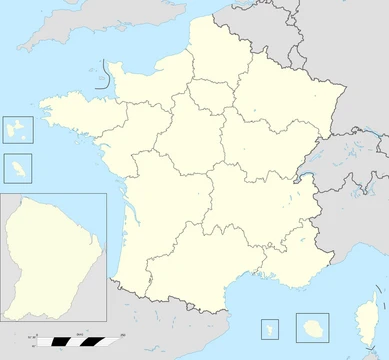
Auvergne is a cultural region in central France, now largely part of the Auvergne-Rhône-Alpes administrative region. It is generally regarded as conterminous with the historical Province of Auvergne, dissolved in 1790, and with the former administrative region of Auvergne (1956–2015). The region is known for its dormant volcanoes, the chaîne des Puys, and its historical significance as the land of the Arverni, a powerful Gallic tribe led by Vercingetorix.
- field
- Cultural region
- nationality
- French
- known_for
- Chaîne des Puys volcanoes, Arverni tribe, Vercingetorix, Battle of Gergovia, Michelin, Volvic mineral water
- area
- Conterminous with historical Province of Auvergne
- highest_point
- Sancy Massif, 1,886 metres (6,188 ft)
Lore & Background
Auvergne was named after the Arverni, one of the most powerful Gallic tribes, which included the Gabali, Vellavi, and Cadurci. Their king Vercingetorix, who became king in 52 BC, united Celtic tribes through hostage alliances. The Arverni capital is believed to have been situated between Gergovie, Corent, Aulnat, and other areas within a 35 km range, with an estimated population of 150,000 in the center and over 400,000 in the region. They were wealthy due to mountainous defenses, gold and silver mines, pastures, metalworking, coin minting, and ceramic manufacture. Vercingetorix initially overcame Julius Caesar at the Battle of Gergovia in 52 BC, but Roman troops later captured him at Alesia.
Reader's Guide
Auvergne's significance lies in its dual identity as a natural and historical region. Geologically, it features the chaîne des Puys, a chain of volcanoes that began forming about 70,000 years ago, with the last confirmed eruption around 4040 BCE. The region includes the highest volcano Puy de Dôme (1,465 m) and the highest point Sancy Massif (1,886 m). Historically, Auvergne was the heartland of the Arverni, whose resistance under Vercingetorix against Julius Caesar is a defining moment in Gallic history. The region later became a feudal county, duchy, and part of the French royal domain. In modern times, Auvergne is underpopulated and agricultural, known for cheeses like Cantal and Saint-Nectaire, and hosts major companies such as Michelin and Volvic. Its legacy includes the Battle of Gergovia site and the World War II Vichy government headquarters.
Did You Know?
- The chaîne des Puys volcanoes began forming about 70,000 years ago, and the last confirmed eruption occurred around 4040 BCE.
- The Arverni capital is believed to have been situated between Gergovie, Corent, Aulnat, and other areas within a 35 km range.
- The Forest of Tronçais covers nearly 11,000 hectares and is the largest oak forest in Europe.
- Auvergne has about 50 freshwater ponds and lakes; Lac de Guéry is the highest lake in the region.
Frequently Asked Questions
Who is Auvergne?
Auvergne is a cultural region in central France that once matched the boundaries of the historical Province of Auvergne before that province was abolished in 1790. Today it is largely folded into the Auvergne-Rhône-Alpes administrative region.
What are Auvergne's powers/role?
The region is most celebrated for its dormant volcanic chain, the Chaîne des Puys, and for producing well-known brands like Michelin and Volvic mineral water. It also carries the deep-rooted heritage of the Arverni, one of the most powerful Gallic tribes.
How does Auvergne's story end?
The standalone administrative region of Auvergne, which ran from 1956 to 2015, was merged into the larger Auvergne-Rhône-Alpes entity effective in 2016. Its cultural identity survives, but it no longer exists as a separate political unit.
Why is Auvergne important?
It was the homeland of the Arverni tribe, whose leader Vercingetorix mounted a major resistance against Roman expansion and scored a decisive victory at the Battle of Gergovia. This makes the region a defining site of Gallic military history.
What is Auvergne's highest point?
The Sancy Massif, at 1,886 metres (6,188 ft), is the highest elevation in the region.
More in French Regions 1-21
Spotted an error? Know more?
This is a living reference — every entry is fact-audited, and reader corrections feed straight into our audit queue. Suggest an edit · See this site's audit record