Limousin
Former administrative region of southwest-central France, least populated in metropolitan France.

Wikipedia / Wikimedia Commons
Limousin was an administrative region in southwest-central France, created in 1960 and named for the historic province that preceded it. It included three departments: Corrèze, Creuse, and Haute-Vienne. As of 1 January 2016, it was merged into the larger region of Nouvelle-Aquitaine. Covering roughly 17,000 square kilometers, it had about 742,770 residents in 2010, making it the least populated region in mainland France.
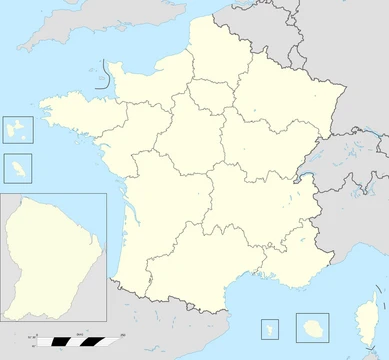
The region sat mostly on the western side of the south-central Massif Central. It bordered Centre-Val de Loire to the north, Auvergne to the east, Midi-Pyrénées to the south, Aquitaine to the southwest, and Poitou-Charentes to the west. Limousin was also part of the broader historical area of Occitania.
Its population was aging and, until 1999, had been shrinking. The department of Creuse had the oldest average age of any French department. Between 1999 and 2004, the population saw a slight increase, the first reversal of decline in decades. Major communities included Brive-la-Gaillarde, Guéret, Limoges, Panazol, Saint-Junien, Tulle, and Ussel.
Historically, Limousin was one of France’s traditional provinces. Its name comes from the Lemovices, a Celtic tribe whose capital was at Saint-Denis-des-Murs. In 2004, their main sanctuary was discovered at Tintignac, yielding unique objects—including carnyces, which are unparalleled in the Celtic world—making the site important for Celtic studies. A notable medieval ruler was Viscount Aimar V of Limoges (c. 1135–c. 1199).
Until the 1970s, Occitan was the main language in rural areas. Several Occitan dialects were still spoken in Limousin, though their use was quickly declining. These included the Limousin dialect itself, the Auvergnat dialect in the east and northeast, the Languedocien dialect in the southern fringe of Corrèze, and in the north, the Crescent transition zone between Occitan and French—sometimes treated as a separate dialect called Marchois.
The word *limousine* comes from the region’s name. It originally referred to a type of carriage hood that resembled the raised hood of the cloaks worn by local shepherds.
- founded
- 1960
- dissolved
- 1 January 2016
- population_2010
- 742,770
- area
- nearly 17,000 km² (6,600 sq mi)
- departments
- Corrèze, Creuse, Haute-Vienne
- capital
- Limoges
- language
- Occitan (primary in rural areas until the 1970s)
Lore & Background
Limousin was one of the traditional provinces of France, its name derived from the Celtic tribe the Lemovices, whose capital was at Saint-Denis-des-Murs. Their main sanctuary, found in 2004 at Tintignac, became a major site for Celtic studies due to unique objects such as the carnyces, unique in the whole Celtic world. Viscount Aimar V of Limoges (c. 1135 – c. 1199) was a notable ruler of the region.
Reader's Guide
Limousin's significance lies in its historical identity as a former province and its role as the least populated region of metropolitan France. Its population was aging and, until 1999, declining; the department of Creuse had the oldest population of any in France. Between 1999 and 2004 the population increased slightly, reversing a decline for the first time in decades. The region is also notable for the word limousine, derived from its name, referring to a carriage hood resembling the raised hood of shepherds' cloaks. Limousin was part of the larger historical Occitania region, and Occitan was the primary language of rural areas until the 1970s, with several dialects in use. The region's legacy includes the Limousin breed of beef cattle and the Limousin dialect of Occitan.
Did You Know?
- The word limousine is derived from the name of the region, from a carriage hood resembling shepherds' cloaks.
- Limousin was the least populated region of metropolitan France, with 742,770 inhabitants in 2010.
- The department of Creuse had the oldest population of any in France.
- The Celtic tribe the Lemovices gave their name to Limousin; their sanctuary at Tintignac yielded unique carnyces.
Frequently Asked Questions
What is Limousin?
Limousin was a former administrative region in southwest-central France, established in 1960 and named after the older historic province that came before it. It no longer exists as a separate entity after being absorbed into the larger Nouvelle-Aquitaine region in 2016.
What departments made up Limousin?
The region was composed of exactly three departments: Corrèze, Creuse, and Haute-Vienne. Its capital city was Limoges, situated within the Haute-Vienne department.
When and why did Limousin get dissolved?
On 1 January 2016, Limousin was merged with Aquitaine and Poitou-Charentes to create the new, larger region of Nouvelle-Aquitaine. This change was part of France's nationwide effort to streamline and reduce the number of its administrative regions.
Why was Limousin notable for its population?
With roughly 742,770 residents recorded in the 2010 census, it held the distinction of being the least populated region in mainland France. Despite covering nearly 17,000 square kilometers of territory, its population density remained remarkably low.
Where was Limousin located geographically?
It sat primarily on the western flank of the Massif Central mountain range in south-central France. Its borders touched Centre-Val de Loire to the north, Auvergne to the east, and Midi-Pyrénées to the south.
More in French Regions 1-21
Spotted an error? Know more?
This is a living reference — every entry is fact-audited, and reader corrections feed straight into our audit queue. Suggest an edit · See this site's audit record