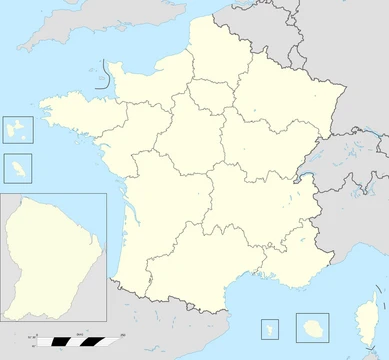
Poitou-Charentes
Former administrative region on the southwest coast of France.
Poitou-Charentes was an administrative region on the southwest coast of France, comprising the departments of Charente, Charente-Maritime, Deux-Sèvres and Vienne. It included the historical provinces of Angoumois, Aunis, Saintonge and Poitou, with Poitiers as its capital. The region was merged with Aquitaine and Limousin to form Nouvelle-Aquitaine on 1 January 2016.
- capital
- Poitiers
- departments
- Charente, Charente-Maritime, Deux-Sèvres, Vienne
- population_rank_2003
- 15th out of 26
- area_rank
- 12th in size
- regional_languages
- Poitevin, Saintongeais, Occitan (Limousin, Marchois)
- merged_into
- Nouvelle-Aquitaine on 1 January 2016
Lore & Background
Poitou-Charentes was home to the Pictavi, a Gallic tribe conquered by the Romans in 56 BC and incorporated into the province of Aquitania. The Visigoths seized the region in 418 AD, but it passed to the Franks in 507. In 732 or 733, Charles Martel halted the Muslim invasion of Western Europe at the Battle of Poitiers. From the 10th to the mid-12th century, the counts of Poitou were also the dukes of Aquitaine, and Poitiers grew in importance. In 1152, Poitou came under English control through the marriage of Eleanor of Aquitaine to Henry II, later king of England. The region was reunited with the French crown in 1416 and remained a province until the Revolution (1789–1795), when it was divided into three departments: Vienne, Deux-Sèvres, and Vendée.
Reader's Guide
Poitou-Charentes is historically significant as the ancestral homeland of many Acadian and Cajun populations in North America, including those in New Brunswick, Louisiana, Nova Scotia, Prince Edward Island, the Gaspé Peninsula of Quebec, and Maine. Their ancestors emigrated from the region in the 17th and 18th centuries, first settling in what is now eastern Canada, where they established an agricultural and maritime economy. The area was dubbed 'Acadia' by the French, possibly after the Greek Arcadia or from the indigenous Mi'kmaq word 'Cadie' meaning 'fertile land'. The region's economy was based on farming (wheat, corn, cattle) and industries producing machinery, chemicals, and dairy products. Notable figures from the area include Françoise-Athénaïs, marquise de Montespan, born in 1640, who became the famous mistress of Louis XIV. The region's three regional languages—Poitevin, Saintongeais, and Occitan—were spoken by a minority. Its administrative existence ended on 1 January 2016 when it merged into Nouvelle-Aquitaine.
Did You Know?
- The region's residents were known as Picto-Charentais in French.
- Southern Poitou-Charentes and Aquitaine is believed to be the region of origin of the Acadian and Cajun populations of North America.
- The name 'Acadia' may derive from the indigenous Mi'kmaq word 'Cadie', meaning 'fertile land'.
- Françoise-Athénaïs, marquise de Montespan, mistress to Louis XIV, was born in the area in 1640.
More in French Regions 1-21
Spotted an error? Know more?
This is a living reference — every entry is fact-audited, and reader corrections feed straight into our audit queue. Suggest an edit · See this site's audit record