Frequently Asked Questions
The most-asked questions about french regions.
What exactly are French regions in the administrative sense?
French regions are the principal administrative subdivisions of France, sitting above the smaller departments in the country's territorial hierarchy. Each one has its own elected regional council responsible for intercity transport, vocational education infrastructure, and economic development within its borders.
How many regions does France have today?
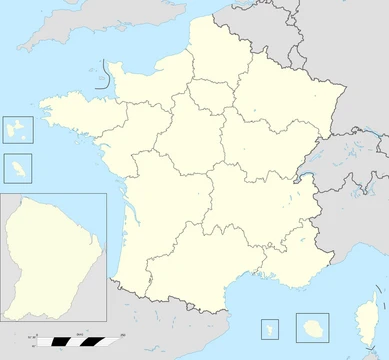
Since the 2016 territorial reform, metropolitan France is divided into 13 regions, while the country as a whole includes 5 overseas regions (Guadeloupe, Martinique, French Guiana, Réunion, and Mayotte). Before 2016 the metropolitan count was 22.
What was the 2016 regional reform and why did it matter?
In January 2016 France merged 22 metropolitan regions into 13 larger units to create more economically viable administrative areas. It was the most significant reorganization of internal borders since the departmental system was created during the Revolution.
Who are the key political figures associated with a region?
The most visible figure is the president of the regional council, chosen by councillors to head the executive and set the regional budget. At the state level, a prefect (préfet) represents central government authority in each region, and the national Minister of Territorial Cohesion oversees inter-regional policy.
Where should a newcomer start getting oriented with French regions?
A practical first step is studying a map of the 13 metropolitan regions alongside their capital cities, since geography anchors most of the local culture and politics. Comparing a few contrasting regions—say the industrial north against the Mediterranean south—quickly builds intuition for how identity and economy vary.
How do regions differ from the smaller departments?
Departments (96 in total) handle more local services such as social aid and secondary roads, while regions manage broader strategic matters like intercity rail, vocational schools, and tourism promotion. Structurally, each department is a subdivision nested inside one region.
What role did the 1982 decentralization laws play in creating modern regions?
The 1982 Décentralisation statutes transferred genuine executive power and budgetary autonomy from the Parisian state to elected regional and departmental assemblies for the first time. Before those laws, regions existed mainly as planning zones without their own elected government.
What makes the five overseas regions distinct from metropolitan ones?
Each overseas region simultaneously holds the status of an overseas department, merging both administrative levels into a single territory. They carry distinct Caribbean, Indian Ocean, or West African cultural identities while also being classified as EU outermost regions.
What are some notable cultural or political moments tied to specific regions?
The 1984 election of the first regional councils in Brittany and Alsace ignited debates over minority-language rights that still shape local politics. The 2016 merger of the two former Breton regions into one unified Breton region was a landmark victory for the regional identity movement.
What is a key economic fact about French regions?
Île-de-France, centered on Paris, generates roughly a quarter of national GDP and employs about a third of the workforce. At the opposite end, several rural regions in the Massif Central and the Alps depend heavily on agriculture, forestry, and seasonal tourism.